


Crypto market sharks: who they are and how they influence asset prices
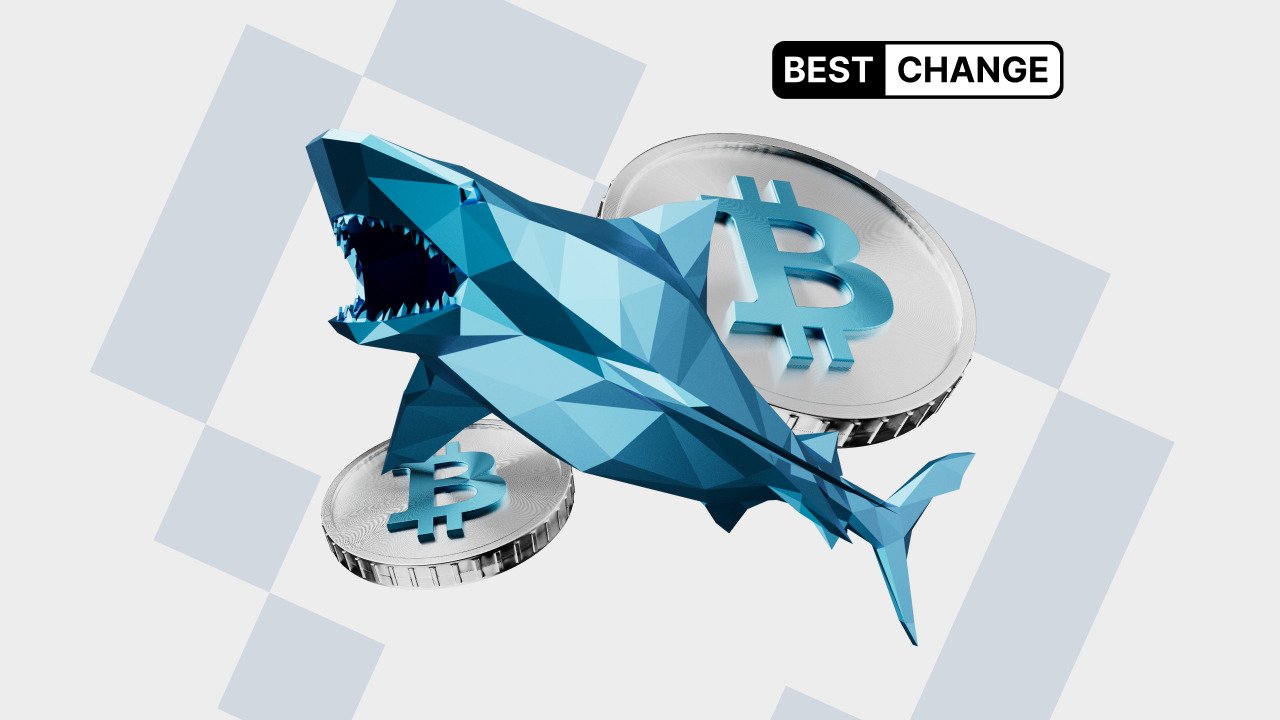
Just like in nature, the cryptocurrency market has its own investor and trader "food chain," determined by portfolio size — ranging from the smallest participants (shrimp) to the largest ones (whales and crypto sharks).
Who are crypto sharks?
Crypto sharks are experienced and aggressive investors or traders with relatively large amounts of capital.
In the cryptocurrency market, sharks are considered the largest participants after whales, typically holding between 500 and 1,000 BTC. Once a crypto shark exceeds the 1,000 BTC threshold, they move into the whale category. Conversely, if their holdings fall below 500 BTC, they are downgraded to the dolphin category.
Unlike whales, crypto shark transactions generally cannot significantly impact the price dynamics of highly capitalized cryptocurrencies such as Bitcoin (BTC), Ethereum (ETH), or Tether (USDT).
However, crypto sharks can influence low-liquidity, small-cap assets, such as memecoins and altcoins outside CoinMarketCap's top 100. Their influence is particularly noticeable on smaller and less well-known exchanges.
Although crypto sharks cannot significantly affect the prices of major assets in the short term like whales can, they may exert considerable pressure on prices through the frequency of their transactions rather than their size. While whales possess more capital than crypto sharks, the total number of whales is significantly smaller than the number of sharks.
According to Bitinfocharts, the number of holders with more than 1,000 bitcoins is fewer than 2,000. By comparison, the number of crypto sharks is almost ten times higher. Moreover, crypto sharks and dolphins collectively hold more bitcoin by value than whales: $372 million versus $303 million.
Crypto sharks are considered one of the most important categories of BTC holders for on-chain analysts. According to Santiment, the dynamics of wallets holding between 500 and 1,000 BTC are frequently used to assess market sentiment and identify potential market direction.
Why are they called "crypto sharks"?
The term "shark" in cryptocurrency was not chosen by accident. Crypto sharks are characterized by aggressive behavior: they are ready to "sink their sharp teeth" into promising assets trading near their lows.
At the same time, crypto sharks are willing to dispose of these assets whenever market euphoria becomes excessive, and conditions appear overheated, increasing the risk of a correction.
Crypto sharks are also distinguished by their speed and accuracy in decision-making, allowing them to accumulate capital efficiently and potentially advance into the whale category under favorable conditions.
In addition, crypto sharks can manipulate smaller digital assets and their trading volumes, directly influencing price movements. This is possible in part because whales are generally uninterested in low-liquidity assets.
Whales tend to react less actively to minor market fluctuations and generally prefer medium- and long-term positions. Crypto sharks, on the other hand, more frequently engage in short-term trading, focusing on speed and precision while executing smaller transactions. As a result, they can grow their capital faster than whales can. However, this approach also exposes them to greater risk than long-term investing.
The role of crypto sharks
There are significantly more crypto sharks than whales, in both participant numbers and total asset holdings. As a result, crypto sharks contribute substantial liquidity to the market and can quickly withdraw it when necessary.
To become crypto sharks, dolphins, and smaller market participants must develop effective strategies that generate consistent capital growth.
On the other hand, if a participant enters the cryptocurrency market with substantial capital but lacks trading experience, they may quickly fall from the shark category into the dolphin category. Therefore, to simply "stay afloat," crypto sharks must demonstrate strong conviction and a deep understanding of the digital asset market.
Crypto sharks may also collaborate with whales, thereby exerting even greater influence on the cryptocurrency market. According to data from the analytics platform Santiment as of March 2026, whales and crypto sharks collectively controlled more than two-thirds of Bitcoin's total supply.
Crypto sharks are often involved in various market-manipulation schemes targeting smaller assets, including the well-known "pump and dump"* strategy.
* Pump & Dump is a market manipulation scheme in which organizers artificially inflate the price of an asset to create hype and attract investors, then sell their holdings to lock in profits.
Although crypto sharks may follow long-term wealth accumulation strategies, they frequently employ more active trading methods, including:
- Derivatives trading in the futures market allows them to profit from both rising and falling asset prices.
- Cross-exchange arbitrage (buying at a lower price on one exchange and selling at a higher price on another);
- Scalping, day trading, and other short-term trading strategies.
It is important to understand that crypto sharks are not always professional traders or institutional investors. Many crypto sharks are early market participants who accumulated significant amounts of digital assets during the early stages of the industry's development and successfully preserved their capital through multiple market cycles.