


Swing trading in cryptocurrency: features, strategies, and risks
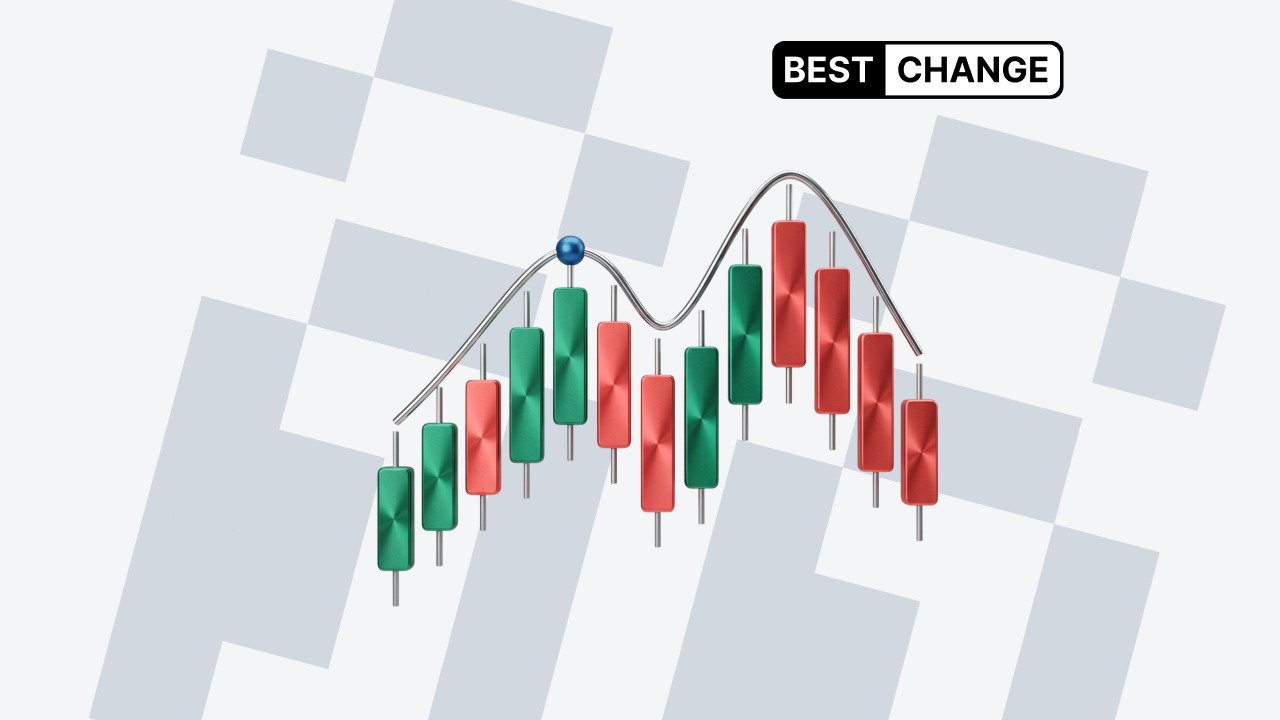
Swing trading is a trading strategy in which positions remain open for several days to several weeks. The trader's primary goal is to profit from relatively significant price movements. In terms of trading intensity, this approach falls somewhere between fast-paced scalping* and long-term investing.
* Scalping is a short-term trading strategy in which a trader executes a large number of trades throughout the day, aiming to profit from small fluctuations in an asset's price. Positions are typically held for anywhere from a few seconds to several minutes. This approach therefore requires constant market monitoring and the ability to react quickly to changes in price quotes.
What is swing trading?
If scalping is like a sprint, swing trading is more like a middle-distance race. Traders do not need to react to every minor price movement, but the primary focus remains on short- and medium-term market trends. Positions are generally held for several days and sometimes for up to two weeks.
Swing trading is popular among cryptocurrency market participants who want to manage their own trades but cannot devote most of their day to trading. Rather than trying to profit from every small price fluctuation, they focus on longer-lasting market movements.
As a result, swing trading can be a suitable option for beginners interested in active trading but who prefer a less intensive pace than scalping.
How swing trading works
Swing trading is based on identifying and taking advantage of short-term trends. These price movements typically last anywhere from several days to a couple of weeks. The exact duration depends on the cryptocurrency being traded and current market conditions.
Consider Bitcoin as an example. If its price breaks through a resistance level and begins to rise, a trader may open a position in anticipation of further upward movement. The position remains open for several days as long as the positive momentum continues. When momentum weakens, or signs of a reversal emerge, the trader closes the position.
Thus, the main objective of swing trading is to identify a promising price move early and exit the trade before the trend loses momentum or changes direction.
Unlike scalpers, who work with short timeframes and need to execute trades almost instantly, swing traders primarily analyze four-hour and daily charts. They use technical analysis tools to make trading decisions while also considering fundamental events, including cryptocurrency project updates, changes in the macroeconomic environment, and other significant news.
Since there is no need to remain in front of a screen constantly, the key parameters of a swing trade are usually determined in advance:
- Entry and exit conditions. The trader sets price levels at which they plan to open a position or lock in profits.
- Stop-loss*. A predefined price level used to limit potential losses.
- Alerts and trading bots. These help monitor market conditions, respond promptly to changes, and automate trade execution.
* Stop-loss is a special trading order designed to automatically close a position when an asset reaches a predetermined price. It helps limit potential losses if the asset's price starts moving in the opposite direction to the trader's expectations.
Swing trading vs. day trading: what's the difference?
The main difference between these approaches is how long positions remain open.
In swing trading, positions can stay open for several days or even a couple of weeks. Day traders, by contrast, close all their positions within a single trading session, sometimes in just a few minutes.
The intensity of trading also differs. Day trading* requires constant market monitoring and quick decision-making. Swing trading leaves more time to assess market conditions and consider possible scenarios.
* Day trading is a trading strategy in which a trader opens and closes all positions within a single day without carrying them over to the next trading session. The main objective is to profit from short-term price movements. This approach requires regular market analysis, high concentration, and the ability to make decisions quickly.
Swing traders typically use four-hour and daily charts for their analysis. Day traders work with much shorter timeframes, typically 1 to 30 minutes, and may open multiple positions throughout the day.
For beginners, swing trading is often easier to learn. There are fewer trades, the workload is lower, and traders have more time to consider each decision. Day trading can also be profitable, but it requires considerable concentration, free time, and practical experience.
Popular swing trading strategies
Swing traders use several common approaches to identify trading opportunities.
1. Trend following
The idea behind this strategy is to identify a sustained upward or downward movement and open positions in the same direction as the prevailing trend.
For example, if Bitcoin's chart shows a series of progressively higher highs and higher lows, this may indicate an uptrend. In this situation, a trader may look for buying opportunities during temporary pullbacks, anticipating that the upward move will continue.
2. Trading support and resistance levels
This approach focuses on price zones from which an asset's price has repeatedly bounced in the past.
Suppose Solana approaches a strong support level, after which its price reverses upward and forms a bullish candlestick. This may signal a long entry. The trader may then set a profit target slightly below the next resistance zone.
3. Moving average crossovers
Another common method involves comparing moving averages calculated over different periods.
For example, a crossover of the short-term 9-day EMA* above the longer-term 20-day EMA may indicate the formation of a new price trend. Traders use such signals to identify potential entry points.
* EMA (Exponential Moving Average) is a technical indicator that calculates an asset's average price over a specified period while assigning greater weight to more recent price data. As a result, EMA responds more quickly to new market movements than a simple moving average. It helps identify trend direction and potential entry and exit points.
4. Trading breakouts from consolidation
Swing traders also look for situations in which an asset's price breaks out of an established trading range.
If a cryptocurrency trades sideways* for an extended period and then breaks through resistance amid a significant increase in trading volume, this may indicate the beginning of a new trend that could last for several days.
* Sideways Movement is a market condition in which an asset's price fluctuates within a defined range without forming a clear upward or downward trend. It usually occurs when buying and selling pressure are relatively balanced and may precede a strong price movement in either direction.
What tools are needed for swing trading?
Unlike high-frequency trading, swing trading does not require complex infrastructure or tools for executing large numbers of orders instantly. Nevertheless, traders need several essential tools to work effectively.
- Charting platforms. Services such as TradingView allow traders to monitor price movements, build charts, and use technical indicators.
- Cryptocurrency exchange. Traders need to choose a reliable trading platform with sufficient liquidity and strong security.
- Technical indicators. Commonly used tools include RSI*, MACD*, moving averages, Bollinger Bands*, and trading volume indicators.
- News sources. Follow industry publications and relevant social media accounts. This helps traders stay informed about cryptocurrency project updates and changes in the macroeconomic environment.
- Risk management tools. Stop-loss orders help limit potential losses. Traders are also advised to determine the risk-to-reward ratio in advance. A 1:3 ratio, or a more favorable one, is often used as a benchmark.
* RSI (Relative Strength Index) is a technical indicator that measures the speed and magnitude of an asset's price changes over a specified period. Its values range from 0 to 100. Readings above 70 generally indicate that an asset may be overbought, while readings below 30 may suggest oversold conditions. RSI helps traders assess the strength of the current price movement and identify potential reversal points.
* MACD (Moving Average Convergence Divergence) is a technical indicator based on comparing two exponential moving averages with different calculation periods. It is used to identify trend direction and strength, assess price momentum, and look for potential signals of a change in market direction.
* Bollinger Bands is a technical indicator consisting of three lines: a central moving average and two outer bands positioned above and below it based on standard price deviation. The distance between the bands changes depending on market volatility: widening indicates increasing volatility, while narrowing suggests a decrease. The indicator helps traders assess the intensity of price fluctuations and identify potential changes in market dynamics.
Advantages and disadvantages of swing trading
Like any trading strategy, swing trading has its strengths and weaknesses. Consider both before getting started.
Advantages
- Less time-consuming. Unlike scalping, this strategy does not require constant chart monitoring or continuous trading.
- Higher profit potential per trade. By taking advantage of longer-lasting price movements, traders may achieve more substantial results than when trading smaller fluctuations.
- Fewer transactions. A lower number of trades can reduce trading-related expenses and allow more attention to be devoted to analyzing each market situation.
- Flexible schedule. This trading approach can be combined with a full-time job and other everyday activities.
Disadvantages
- Overnight and weekend risks. While a position remains open, the price can change unexpectedly. This is particularly relevant to the cryptocurrency market, which operates around the clock.
- The need to wait. Some trades take several days to develop, so traders need to remain patient and avoid rushing their decisions.
- Emotional pressure. The temptation to close a profitable position too early or panic during a temporary price decline can lead to irrational decisions.
- High volatility. Even an established trend can unexpectedly reverse. Cryptocurrency assets are particularly susceptible to sharp price fluctuations.
Is swing trading suitable for beginners?
Swing trading is considered one of the relatively accessible ways to learn active trading. It is particularly suitable for those already familiar with the basic principles of chart analysis and how to use technical indicators.
The main advantage of swing trading for beginners is the opportunity to study market conditions at a comfortable pace and plan their actions. Unlike scalping, traders do not have to make decisions in a fraction of a second. At the same time, they remain active market participants and can open new positions regularly.
Those who are just starting to explore this approach should follow several recommendations:
- Start with small amounts. This helps beginners get used to holding positions open for several days while minimizing potential losses during the learning process.
- Always use stop-loss orders. Predetermined loss limits help protect a trading account against unfavorable market movements.
- Keep a trading journal. Record trade results, the reasons for opening and closing positions, and personal observations. This helps identify which decisions were successful and which led to mistakes.
- Choose cryptocurrencies with large market capitalizations. For their first trades, beginners may want to consider BTC, ETH, and SOL. These assets are generally less volatile than smaller cryptocurrencies.